
Find Death Records in Gregg County
Gregg County death records are maintained by the County Clerk's vital records department in Longview, Texas. The Gregg County Death Index covers all deaths registered in the county from 1903 to the present. This page covers how to request certified copies, explains who can get records less than 25 years old, and points to free online tools for searching the Gregg County death index.
Gregg County Overview
Gregg County Clerk Vital Records Department
The Gregg County Clerk's vital records department in Longview handles birth certificates, death certificates, and marriage licenses for the county. The phone number for the vital records department is 903-758-6181. The County Clerk's office maintains all vital records for Longview city and the rest of Gregg County. Death records are available from 1903 to the present. All records are issued under the standards and fees set by Texas DSHS Vital Statistics.
A certified copy of a Gregg County death certificate costs $21 for the first copy. Each additional copy of the same record ordered at the same time is $4. These fees are fixed by Texas state law. In-person requests at the Gregg County Courthouse in Longview are the fastest way to get a certified copy. Bring a valid government-issued photo ID. The clerk can search the death index by name and pull a copy while you wait during most visits.
Mail requests are also accepted. Complete the VS-142 Death Certificate Application, attach a copy of your photo ID, and include a money order payable to the Gregg County Clerk. Mail to the Gregg County Courthouse in Longview. Allow several business days after the office receives your materials. For online orders, visit txapps.texas.gov, but note that online orders go through DSHS in Austin and take 20 to 25 business days to arrive.
Note: The Gregg County Clerk in Longview can only issue death certificates for events that occurred within Gregg County. For deaths in any other Texas county, you will need to contact that county's clerk or order through DSHS in Austin.
The Texas DSHS Vital Statistics office sets the fee schedule and access rules that the Gregg County Clerk follows when processing death record requests.
The Gregg County death record system works exactly like every other Texas county, with the same fees and access restrictions applying statewide.
Access Rules for Gregg County Death Records
Texas law restricts death records filed within the past 25 years. Only qualified applicants can get certified copies of recent Gregg County death certificates. A qualified applicant is an immediate family member of the person on the record. That includes a spouse, parent, child, sibling, or grandparent. A legal guardian or legal representative with proper documentation may also request records. Texas Government Code Section 552.115 governs this restriction for both county and state death records.
After 25 years, the record is public. Anyone can request it without showing a family relationship. All requesters must still present a valid government-issued photo ID. The DSHS acceptable ID list covers every form the clerk will accept. A driver's license, state ID card, passport, or military ID all qualify as primary ID. If you cannot produce a primary ID, two secondary forms from the DSHS list may be combined.
If a search is performed and no record is found, the clerk still charges the same non-refundable fee as for a certificate. This is required under Texas law regardless of the outcome. Falsifying information to obtain a death certificate is a felony with penalties of two to ten years in prison and fines up to $10,000 under Texas Health and Safety Code Chapter 195. The clerk records the identity of every person who requests a record.
Gregg County Death Records for Research
Gregg County was established in 1873 in east Texas and grew significantly with the oil booms of the early 20th century. Longview became a major city in the region, which means the death records here reflect a wide range of communities and industries over more than a century. For genealogy researchers, the death index provides a useful entry point. Free online tools are a good place to start before contacting the county.
FamilySearch's Texas Death Index covers 1903 to 2000 and is free to use. It shows the name, county, date, and certificate number for each death. Ancestry's Texas Death Index covers the same range and links to images for some early years. Both are indexes only. They help you confirm that a Gregg County death record exists and gather the details you need to request a certified copy. The Texas State Library and Archives holds statewide death index microfilm from 1903 to 1973 for in-person research in Austin.
The DSHS Order Records Locally page lists the Gregg County Clerk in Longview among the local offices where certified death certificates can be obtained directly.
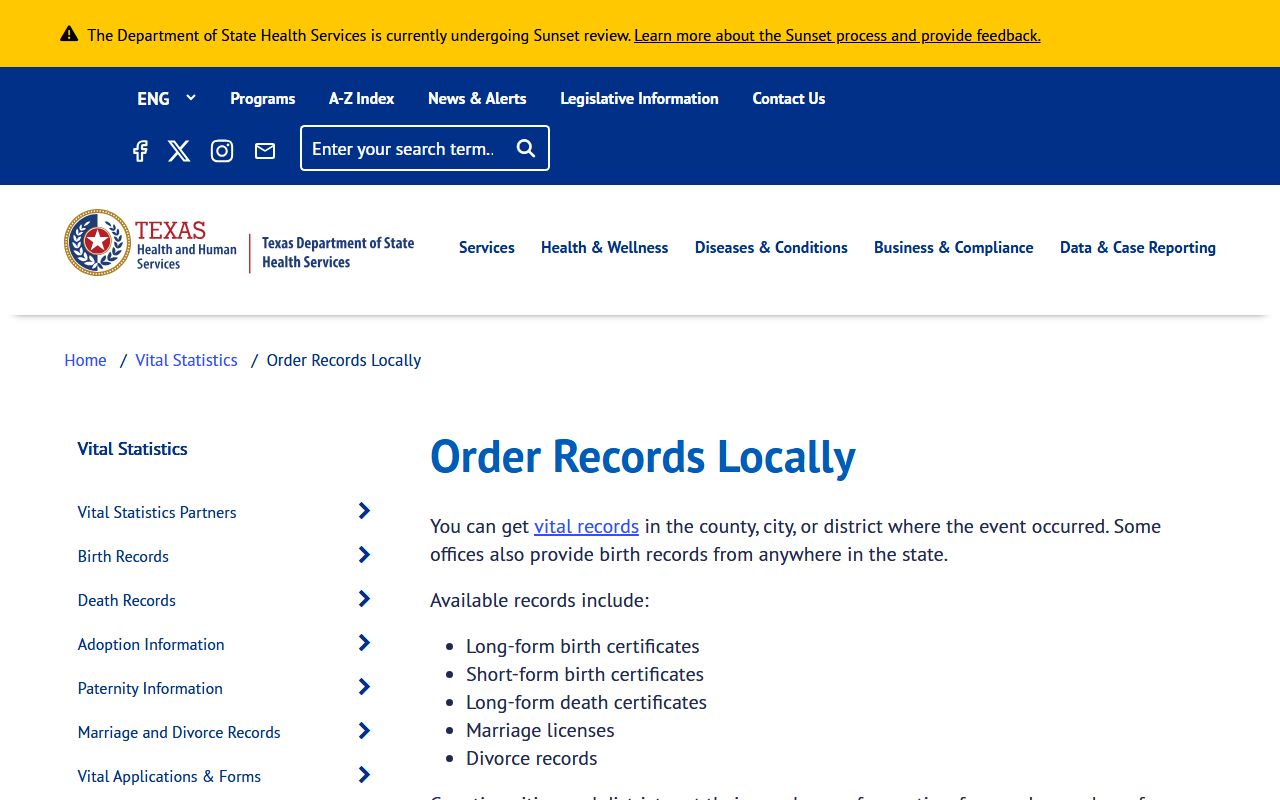
Using the Gregg County Clerk in Longview for in-person or mail requests is faster than the state ordering system, which takes 20 to 30 business days on average.
Cities in Gregg County
Gregg County is centered on Longview, the county seat and largest city in the county. Kilgore is also located in Gregg County. All death records for events in the county are processed through the Gregg County Clerk in Longview.
Other communities in Gregg County include Kilgore, White Oak, and Gladewater. Death records for all areas in the county go through the Gregg County Clerk at the courthouse in Longview.
Nearby Counties
These counties border Gregg County in east Texas. If a death occurred near a county line, the county of last residence on the death certificate identifies the right office.
Upshur County • Harrison County • Rusk County • Smith County